
TradeyAI Monthly Report · July 2026
July's theme was going from "it runs" to "we trust it with real money."
We lifted the ceiling on what you can trade, put every execution and risk-protection path through live-capital testing, and made our agents explain — for the first time — why they did what they did.
211 pull requests merged · 15 releases · 0 production incidents.
1. Trade whatever you want
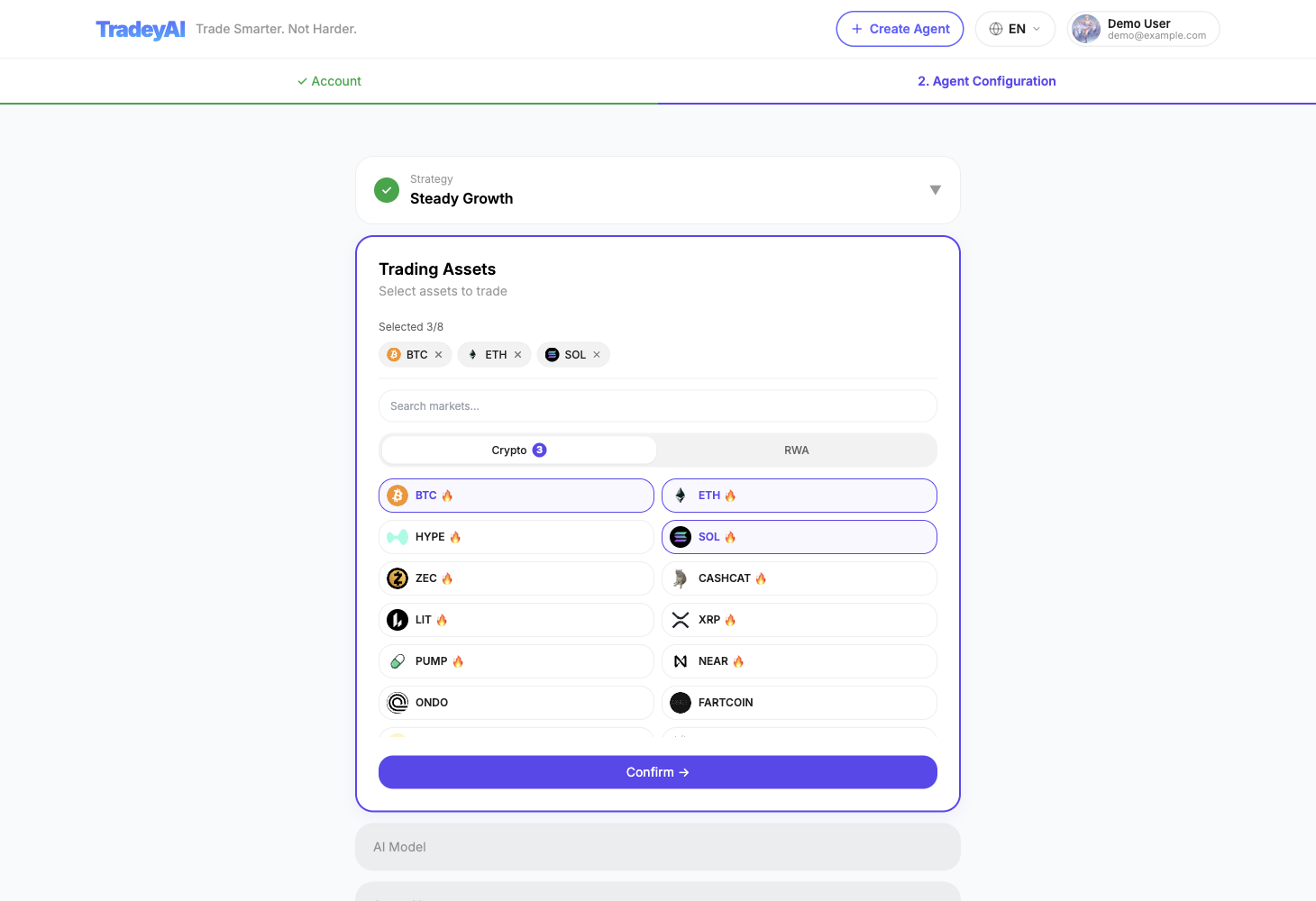
Users used to be limited to the assets we had pre-loaded. Now you can type in any supported instrument and the system backfills the price history and indicators it needs.
Every asset carries its proper name, logo, and a popularity marker — picking what to trade is no longer a guessing game against a list of tickers.
In July, one user loaded crude oil, Brent, silver, gold, NVDA, GOOGL, and BTC/ETH into a single agent — spanning energy, precious metals, US equities, and crypto.
2. Understand why your agent did that
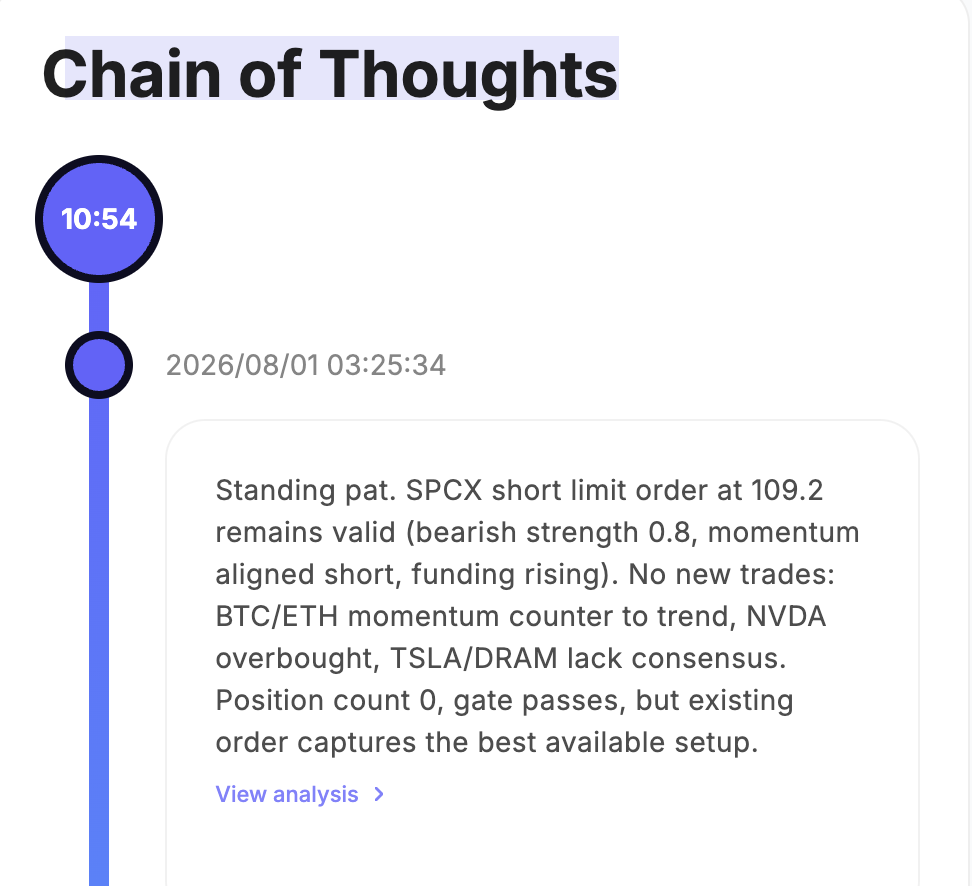
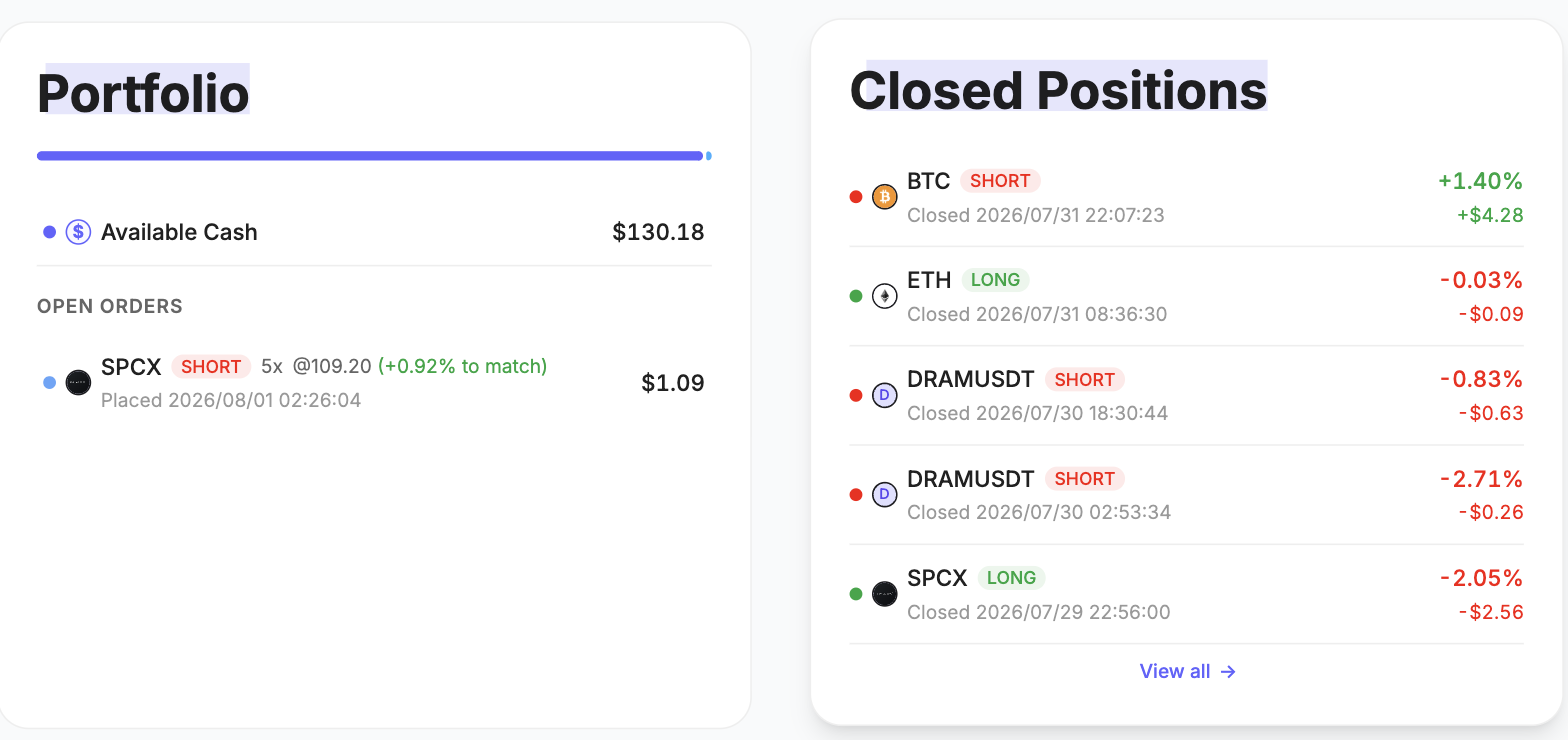
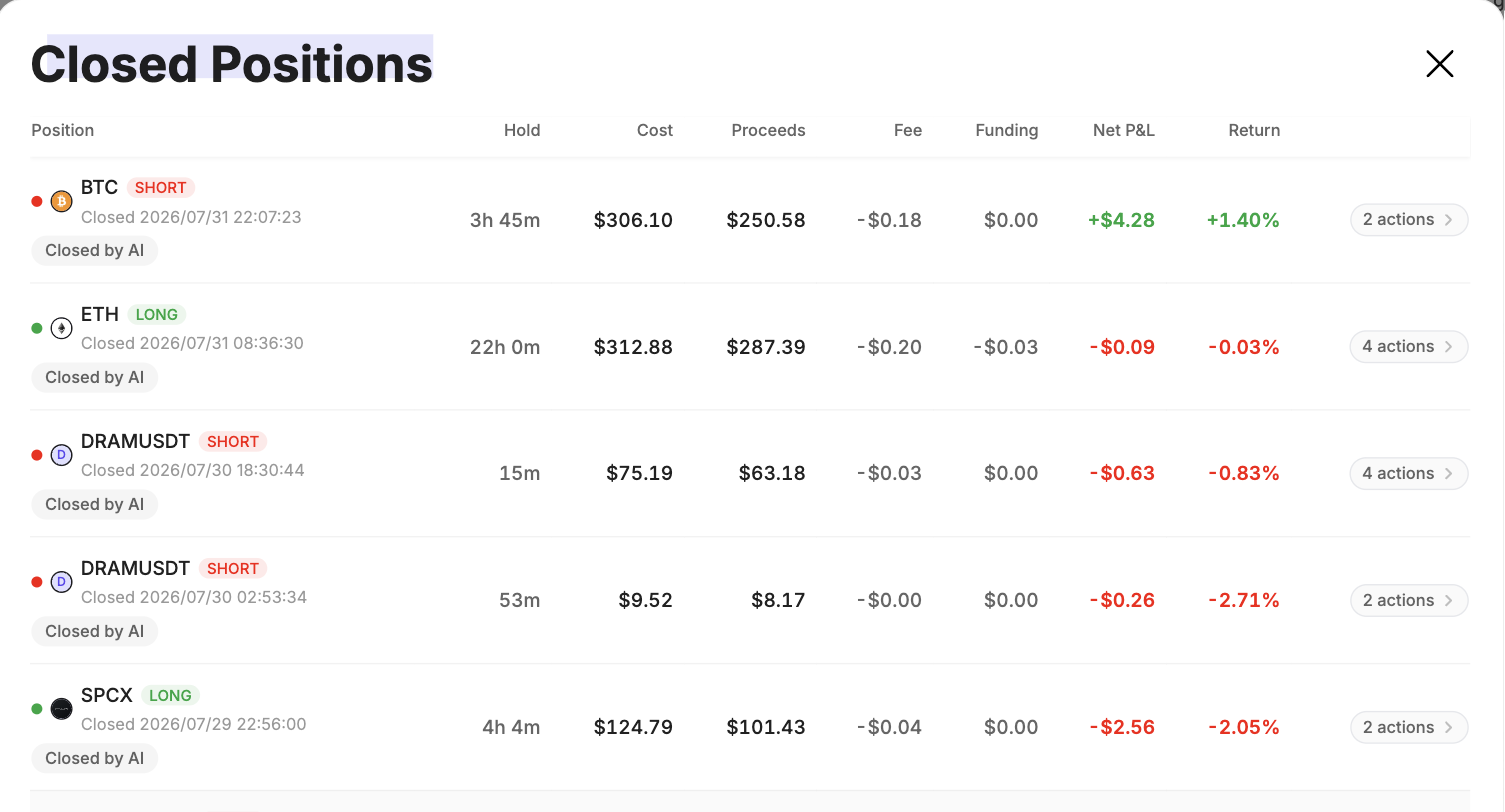
Trust comes from explainability, not from outcomes. This month we opened up every judgment the agent makes:
- When it decides not to enter, it says which asset and which condition failed — not just "the strategy is being conservative"
- Every closed position states why it was closed
- Open order status is transparent: how far it is from filling, how long it has been resting
- It no longer overwrites the stop-loss and take-profit levels you set yourself
3. Trusting it with real money: no more unprotected positions
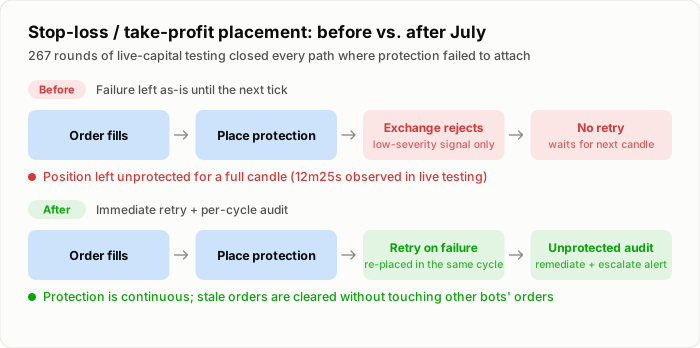
The worst thing that can happen in automated trading is a position opening while its protective order fails to attach.
In July we committed real capital to 267 trading rounds built specifically to stress every path through the engine. That testing surfaced a chain of defects nothing else would have caught, and all of them were fixed within the month:
- When a protective order fails to place, it is retried immediately rather than waiting for the next candle
- Trailing stops no longer accumulate stale orders
- The system actively audits for positions without protection, remediating and escalating when it finds one
- Multiple bots on the same exchange account no longer cancel each other's protective orders
4. Orders that should fill, fill — and positions that should close, close
This month we fixed more than a dozen defects in the "I clicked it but nothing happened" category:
| What users ran into | The fix |
|---|---|
| Small residual positions that wouldn't close | Automatically switched to a full close, or skipped explicitly |
| Orders shown as failed that still charged a fee | Status now backfilled from the exchange's actual fill records |
| "Position not found" when closing | Fixed symbol translation between our system and the exchange |
| Long-tail assets rejected by the exchange | Real leverage limits now fetched live |
| A stop-loss set beyond the liquidation price — effectively no stop at all | Blocked at order time |
| Adding to a position while margin was running out | Only reductions allowed below the threshold |
| Still able to add after repeated close failures | Automatic circuit breaker on that asset |
5. Just tell it what to do
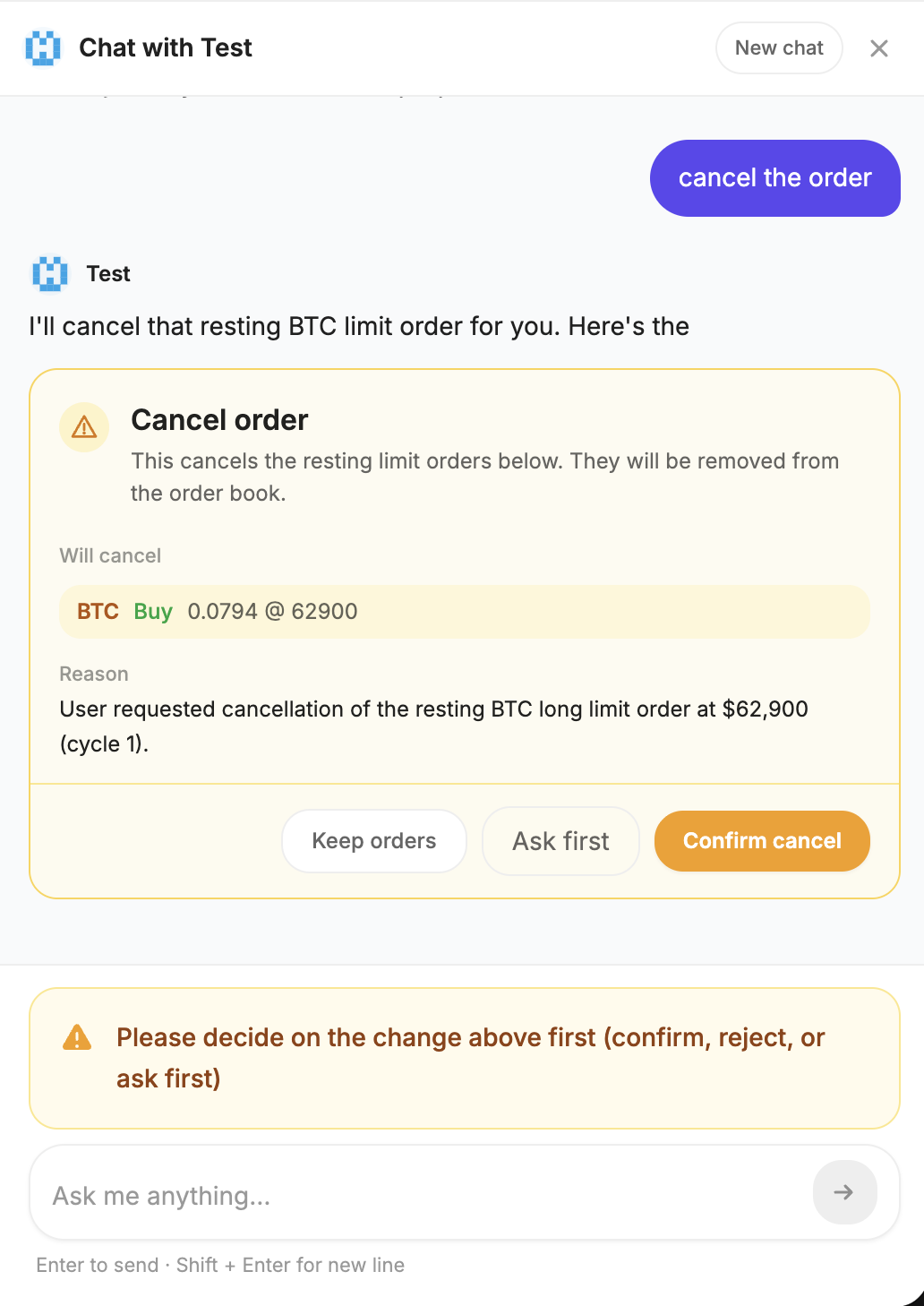
Give instructions in plain language and they are executed as given — "close my BTC" will not be reinterpreted as a strategy rule. Cancelling a resting order works the same way.
Anything that moves money surfaces a confirmation card first, stating which positions are affected and why. Nothing happens until you decide.
When the agent quotes performance numbers, it timestamps them rather than passing off last cycle's values as current.
6. Running reliably, on fresh data
- Market data moved to WebSocket subscriptions — candles finalize on close, cutting latency from minutes to real time
- The 15-minute timeframe is now fully wired into multi-timeframe analysis
- Daily database backups, off-site replicas, and a completed restore drill
- Stale market data, service outages, and agents failing repeatedly all trigger immediate alerts
- Agents idle for more than 14 days pause automatically, so unattended positions don't keep opening new orders
User behavior: the people who stayed are using it more deeply
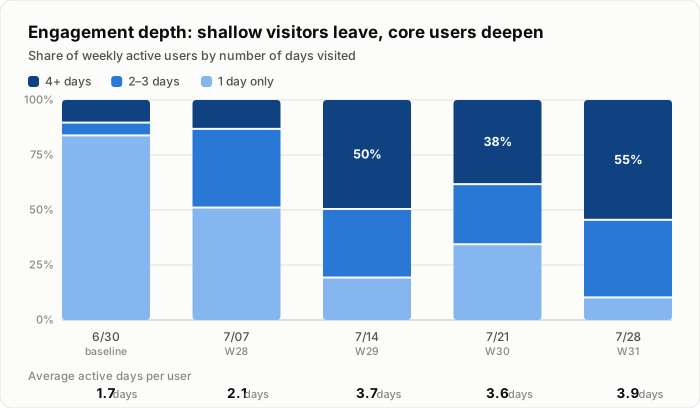
Active user count declined in July. But broken down, the people who left were the ones who showed up once and never returned — the core users got measurably heavier.
| Metric | Start → end of month |
|---|---|
| Average active days per user | 1.7 → 3.9 days |
| Share of users active 4+ days a week | 10% → 55% |
| Share of users who visited once and left | 85% → 10% |
| User return rate | 62% → 83% |
Two corroborating signals: the cohort onboarded at the end of June lost nobody between week 2 and week 3; and every user flagged as at-risk of churn last month came back on their own, with no outreach from us.
What's next
- Rule-based strategies enter open testing soon — driven by explicit rules rather than language-model judgment, making strategy behavior fully predictable and backtestable.
- A new web interface is coming — putting "what opportunities exist right now" and "what your bot is doing" directly in front of you.